



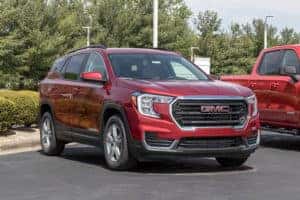
It is not inaccurate to say that Americans adore sport-utility vehicles, or SUVs, which is why SUV sales have been increasing across the country. SUVs are an excellent alternative for people looking for an all-wheel-drive vehicle that allows them to cruise off-road and make the most of their ride.
However, not everyone can own an SUV. The good thing is that you may now buy a slightly used SUV at a far lesser price than a brand-new one. So, what should you be aware of when buying an SUV? At Cutter Buick GMC, we have gathered eight guidelines for purchasing SUVs for sale that may help you decide what vehicle to purchase.
Do Your Research
A well-tuned vehicle may easily survive up to 200,000 miles, so don’t be afraid of a high-mileage car if all else is in line. Mileage that is significantly less or more than the national median of 14,000 annually, on the contrary, is a red flag. Low mileage might imply a seldom-driven station car.
Dull paint can be brushed out if you aren’t interested in a painting service. However, a peeling coat needs to be sanded away, which will also add to the costs.
Read the Technical Assessment
It is impossible to stress the value of having an automobile checked and receiving a reliable inspection from a third party. Before committing to an agreement, prepare for the vehicle to be checked by a respected local technician or skilled car specialist. If the seller declines, or worse, arranges for the vehicle to the dealer’s shop, the transaction is off.
Although a mechanical flaw isn’t usually a big deal, it should be considered when pricing. Look at enthusiast forums if you don’t know anybody in your community. Someone in the neighborhood may be ready to spend a day evaluating your vehicle or, at the absolute least, advise a good repair shop.
Fuel Efficiency
If you go from a standard car to an SUV, your fuel costs will almost surely rise. Car makers often include fuel-saving technologies in new SUVs. The more load and rims a vehicle has, the more fuel it requires to propel it. When you drive rapidly or the car is filled with people and baggage, the engine kicks in more quickly, burning more gasoline.
Difference in Handling
An SUV has a greater gravity point than a car, and the added weight will cause you to notice a distinction in control. The weight distribution of a sport-utility vehicle is bigger than that of a car. Expect more “rolling resistance,” or the vehicle tilting in the reverse direction of a move or lane shift.
Consider the Cargo Space
The load capacity of the used SUV you purchase also influences the pricing. Consider how wide the opening is, how far the trunk lid opens, how higher you must lift products over the front, how easy it is to lay down the rear seats if they recline flat, and if the wheels or other parts encroach into the baggage area. It won’t work if you can’t fit your stroller, golf clubs, or other essential items into the vehicle, so carry some personal items with you on the road test.
Off-Road Features
Although AWD and 4WD are frequently used similarly, they are not the same. It’s vital to grasp the difference, and the sort of 4WD you’re thinking about buying. Two-wheel-drive (2WD) is usually the initial option on a basic system, next by 4-High and 4-Low. Those last two are only suitable for off-road or slippery roads because they may be ruined if driven on firm terrain like regular roads. You may only run in 4WD on concrete if your vehicle has a 4-Auto feature. On numerous SUVs, the 4-Auto is only present on pricier model versions.
It is crucial to remember that 4WD SUVs are more expensive and use more petroleum than AWD SUVs with the same features. Many drivers underestimate their needs. Unless your residence or campsite is off the major road and requires a mud-bogging or rock-crawling vehicle to get there, AWD should be enough. Be truthful when it comes to your needs.
Extra Money for a Larger Car
The extra room you seek comes with a hefty price tag and additional expenditures. For example, an SUV’s wheels are typically larger than those of a sedan. The tires may get considerably bigger as you climb the trim ladder, and they’ll be much more expensive to repair when they wear out.
On bigger wheels, reduced tires with a narrower sidewall are often used. These can result in a harsher, bumpier ride and a greater chance of costly rim damage if you hit a pothole. Consider these extra costs in mind while shopping for an SUV.
Get Pre-approved
This is the crucial issue that every prospective buyer must ask themselves before surfing the net, to a dealer, or even to a bidding lot. Before you start looking for an SUV, it is good to receive pre-approval for a vehicle loan. Furthermore, you would want to know how much cash you have before becoming charmed with an SUV on the market. Another factor why getting pre-approval for a vehicle loan is critical is that it might uncover problems within your credit record that can be addressed or improved.
SUVs for Sale at Cutter Buick GMC in Waipahu, HI
When you decide to acquire a used SUV, you should be aware of the many kinds and specifications available. Cutter Buick GMC in Waipahu, HI, is the perfect location to learn more about SUVs and uncover some amazing and affordable used selections that will meet your budget. The recommendations for purchasing used SUVs for sale will guarantee that you acquire the automobile of your dreams without breaking the budget.
Visit us at Cutter Buick GMC today! We’re conveniently located at 94-149 Farrington Hwy, Waipahu, HI 96797. Our Buick and GMC dealership is about 30 minutes from Honolulu and Pearl City, making us a great vehicle provider. We’re open Monday to Saturday, 9 am to 8 pm, and Sunday, 9 am to 6 pm. We’re also the go-to source for auto services. Come see us today! We can’t wait to see you.
Connect with us
