

Blog

7 Safety Features Your Modern Car Should Have

Key Takeaways:

  • Your safety on the road is paramount, and modern cars come equipped with advanced features to enhance it.
  • From adaptive cruise control to blind-spot monitoring, these safety features can prevent accidents and protect you and your passengers.
  • Understand the importance of these technologies in keeping you safe and informed while driving.
  • When shopping for a new car, prioritize vehicles with these safety features to ensure a secure and enjoyable driving experience.

For any car buyer, safety is a top concern. Whether you’re commuting to work, running errands, or embarking on a road trip, knowing that you and your loved ones are protected is essential. In today’s automotive landscape, manufacturers have recognized this need and incorporated many safety features into their vehicles. At Cutter Buick GMC, we understand that safety is paramount to our customers in Honolulu and beyond. That’s why we’re here to guide you through the crucial safety features your modern car should have. As you explore our selection of vehicles, consider these features as vital components of your next car purchase, ensuring peace of mind with every drive.

Adaptive Cruise Control

Adaptive Cruise Control (ACC) is a standout safety feature in modern cars. ACC takes traditional cruise control to the next level by utilizing sensors and radar to monitor the distance between your car and the vehicle in front. This system automatically adjusts your vehicle’s speed to maintain a safe following distance, making highway driving more relaxed and secure.

But ACC isn’t just about convenience; it’s a valuable safety tool. It reduces the risk of rear-end collisions by maintaining a safe gap from the vehicle ahead, even if traffic suddenly slows down. Thus, it can help prevent accidents caused by delayed reactions.

Lane Departure Warning and Lane Keeping Assist

Lane Departure Warning (LDW) and Lane Keeping Assist (LKA) are safety features designed to combat one of the leading causes of accidents: lane drifting. LDW alerts you when your vehicle unintentionally drifts out of its lane, typically through visual or auditory warnings. On the other hand, LKA takes it a step further by actively assisting in steering your car back into its lane.

These features are especially valuable for long highway drives or during moments of driver fatigue when unintentional lane drifting becomes more likely. LDW and LKA work together to ensure you stay within your lane, reducing the risk of collisions due to lane departure.

Blind-Spot Monitoring 

Blind spots, those areas around your vehicle not visible in your mirrors, have long been a concern for drivers. Modern cars address this issue with Blind-Spot Monitoring (BSM) systems. BSM uses sensors to monitor the areas alongside and behind your vehicle, areas that are typically challenging to see with mirrors alone.

When a vehicle enters your blind spot, BSM typically alerts you through visual indicators in your side mirrors or auditory signals. Some systems even offer active intervention, nudging your car away from a potential collision course if you attempt to change lanes while a vehicle is in your blind spot.

Pedestrian Detection and Automatic Emergency Braking 

In today’s bustling urban environments, pedestrians can unexpectedly cross your path. Pedestrian Detection, often integrated with Automatic Emergency Braking (AEB), is a cutting-edge safety feature that uses cameras and sensors to identify pedestrians in or near your vehicle’s path.

When a potential collision is detected, your car can provide both visual and audible warnings to alert you. If you fail to react quickly, AEB can automatically apply the brakes to mitigate or prevent an impact. This feature is especially valuable in city driving scenarios, where pedestrian traffic is common and unexpected movements can occur anytime.

Forward Collision Warning (FCW) and Collision Mitigation Systems 

Forward Collision Warning (FCW) is your virtual co-pilot, scanning the road ahead for potential hazards. It uses radar or cameras to monitor the distance between your vehicle and the one in front. When FCW senses an impending collision, it issues a warning, giving you precious seconds to react.

But what if you’re unable to respond promptly? That’s where Collision Mitigation Systems come into play. These systems can take action on your behalf. They apply the brakes or provide additional steering input to help you avoid or mitigate the severity of a collision. Whether it’s a sudden stop by the car ahead or a pedestrian crossing your path, FCW and Collision Mitigation Systems are your safety nets.

360-Degree Camera Systems 

Parking and maneuvering in tight spaces can be challenging. That’s where 360-degree Camera Systems, or Surround-View Cameras, come to the rescue. These systems utilize multiple cameras positioned around your vehicle to provide a bird’s-eye view of your surroundings.

When you engage reverse or low-speed maneuvers, the system displays a composite image on your infotainment screen, offering a top-down perspective of your vehicle and its proximity to objects or obstacles. This feature not only aids in parking but also enhances safety by reducing the risk of collisions with unseen objects or pedestrians. It’s like having an extra set of eyes, making navigating crowded parking lots or tight city streets a breeze.

Rear Cross-Traffic Alert (RCTA) 

Backing out of parking spaces or driveways can be a nerve-wracking experience, especially when your view is obstructed by surrounding vehicles or structures. Rear Cross-Traffic Alert (RCTA) is designed to alleviate this stress. RCTA uses sensors, often radar, to detect approaching vehicles or pedestrians from the sides as you reverse. The system issues alerts if a potential collision is detected, typically through visual or auditory signals. Some RCTA systems can even apply the brakes to prevent a crash if necessary.

Find the Right Car Today!

Your safety is our priority at Cutter Buick GMC. As you explore our selection of vehicles, we encourage you to prioritize models equipped with these essential safety features. From Adaptive Cruise Control to Lane Departure Warning and Blind-Spot Monitoring, these technologies are designed to keep you and your loved ones safe on the road.

Visit our dealership in Honolulu or explore our website to discover a wide range of vehicles equipped with these advanced safety features. Your peace of mind is just a test drive away. At Cutter Buick GMC, safety isn’t an option; it’s standard.
Recommended Posts

Car Battery Smells Like Rotten Eggs and What It Means

Car battery smells like rotten eggs can point to hydrogen sulfide gas escaping near the battery. That odor deserves prompt attention because a healthy battery should not release a strong sulfur smell. Hydrogen sulfide can appear when a lead acid battery overheats, leaks, or receives too much charging current. Therefore, the smell is a clue that the battery and charging circuit need inspection. You do not need to panic, but you should avoid ignoring the odor. Car Battery Smells Like Rotten Eggs Because Gas Is Escaping Why does a car battery smell like rotten eggs? Hydrogen sulfide is a sulfur bearing gas that can create this odor around a failing battery. A conventional 12 volt lead acid battery contains electrolyte and lead plates inside a sealed or vented case. Chemical reactions inside the battery store and release electrical energy. However, excessive heat or charging can disturb that process and increase gas production. Hydrogen sulfide carries a very distinct sulfur odor. Therefore, a rotten egg smell near the battery deserves attention even if the engine still starts. The battery may still provide power while internal damage develops. more Additionally, visible clues can support the diagnosis. Swelling, cracks, wet residue, heavy corrosion, or unusual heat deserve a closer look. A battery case that changes shape can indicate internal pressure or heat. GMC models rely on the 12 volt battery for starting and many electrical functions. Because of that role, battery trouble can also show up through slow cranking or unstable electrical operation. Still, the odor itself should lead to inspection before the problem grows. What Does Battery Acid Smell Like? Battery acid is sulfuric acid electrolyte, while hydrogen sulfide creates the familiar rotten egg odor. The two substances are related to battery chemistry, but they are not the same thing. Sulfuric acid sits inside many lead acid batteries as part of the electrolyte mixture. It is highly corrosive and can damage skin, eyes, clothing, and nearby materials. Therefore, visible leakage should never be handled casually. Hydrogen sulfide is a gas. It can escape when the battery overheats or suffers internal trouble. Because the gas carries the sulfur smell, people may mistake that odor for liquid battery acid. That distinction matters when you inspect the area. Wet residue near the case points toward possible electrolyte leakage. By contrast, odor without visible liquid can still point toward internal battery trouble. Additionally, corrosion around battery terminals does not automatically identify the exact fault. Corrosion can form through several chemical processes around the battery. Therefore, a technician should inspect the case, terminals, cables, and charging output together. If liquid is present, avoid touching it with bare skin. In addition, keep sparks, cigarettes, and open flames away from the battery area. A damaged battery deserves careful handling and proper service. How Overcharging Can Heat a Battery Can an alternator make the battery smell like sulfur? The alternator charges the battery while the engine runs, and excessive charging can overheat it. The charging circuit regulates how much electrical energy reaches the battery. When voltage rises too high, the battery can receive more charging current than it should. Consequently, internal temperature can rise and chemical reactions can accelerate. That extra heat can increase gas production inside a lead acid battery. Therefore, replacing only the battery may miss the source when the charging circuit has a fault. A technician may inspect several areas after a sulfur odor appears: Charging voltage can show whether the alternator and regulator are sending the battery an appropriate electrical level. Battery temperature and case shape can reveal heat or pressure that deserves closer inspection. Cable and terminal state can show whether poor electrical connections are adding resistance or creating charging problems. A weak alternator can create other electrical problems, but excessive charging raises a different concern. Therefore, the testing process should include battery health and charging output. For GMC owners, this matters because a fresh battery can suffer damage if an unresolved charging fault remains. A complete inspection protects the replacement from the same cause. When the Smell May Come From Somewhere Else Does every rotten egg smell come from the battery? Sulfur odors can also come from fuel or exhaust faults, so odor location provides useful diagnostic context. A catalytic converter processes exhaust gases before they leave the tailpipe. Fuel mixture problems or converter trouble can create a sulfur odor near the exhaust path. Therefore, the strongest smell location can guide the first inspection. If the odor is strongest under the hood near the battery, battery trouble moves higher on the list. If the smell follows the exhaust stream, the technician may inspect fuel and exhaust components first. Additional symptoms also matter. A battery problem may appear with swelling, corrosion, slow cranking, or electrical trouble. By contrast, an exhaust related issue may appear with poor engine operation, warning lights, or unusual exhaust odor. Still, smell alone cannot confirm the exact source. A technician can inspect both areas when the origin is unclear. Therefore, avoid replacing parts based only on odor. A GMC owner may notice the smell after parking, starting, or driving. The timing and location both provide useful clues. Sharing those details can make the inspection more focused. What Should You Do When a Battery Smells Like Sulfur? A sulfur odor near the battery calls for prompt inspection of the battery and charging circuit. The safest next step is to limit handling and have the source checked. Do not lean directly over a swollen, hot, cracked, or leaking battery. In addition, keep ignition sources away from the area. Hydrogen sulfide and other battery gases deserve caution. Before service, note what you observed: Odor location can show whether the smell is strongest near the battery or the exhaust. Visible swelling, wet residue, or corrosion can give the technician useful inspection clues. Starting trouble, warning lights, or recent charging problems can add context to the battery test. If the battery feels hot or looks damaged, avoid unnecessary driving. Therefore, professional inspection should happen before you rely on the vehicle for another trip. The technician can test battery state, charging voltage, cable connections, and visible battery damage. If the alternator is overcharging, that fault also needs correction before a replacement battery goes into service. Car battery smells like rotten eggs should never become a background odor you simply accept. The smell can point toward battery gas release or another sulfur source. With a careful inspection, you can identify the source and handle the repair with clear information.

How to Defog Windshield in Humidity: A Hawaii Guide

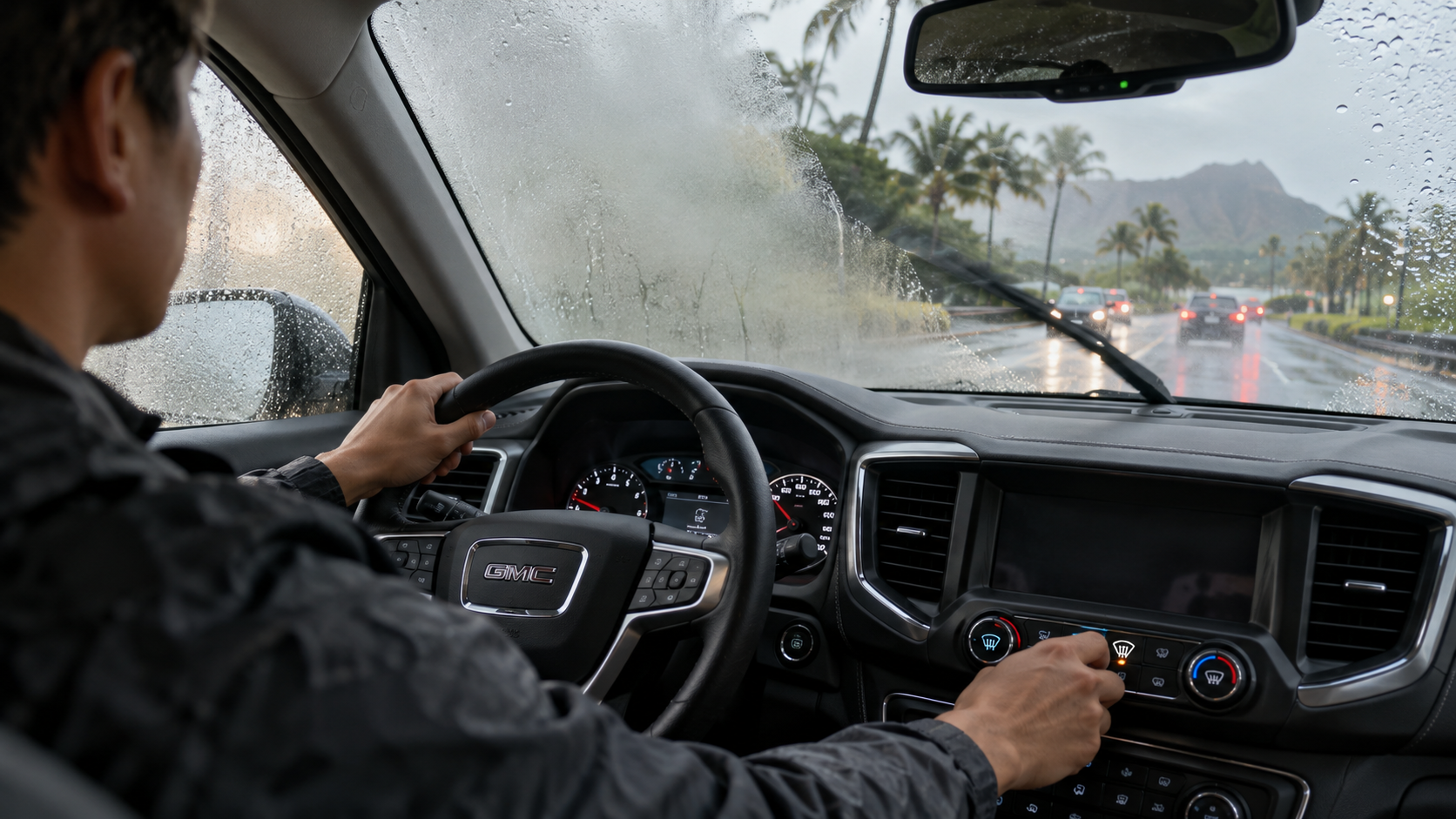
Learning how to defog windshield in humidity starts with finding which side of the glass holds the moisture. Hawaii rain can raise moisture levels within minutes. Cool cabin air can also chill the windshield during a warm drive. Therefore, the correct fix starts with a quick surface check. Once you find the wet side, each climate control has a clear job. The goal is simple. Remove moisture, warm the glass slightly, and restore a clear view. Why Windshields Fog in Hawaii Windshield fog is liquid water that forms when moist air touches glass below its dew point. Dew point is the temperature where air can no longer hold all its water vapor. Therefore, that vapor changes into tiny droplets on the glass. In addition, Hawaii creates several common triggers. Warm outdoor air carries plenty of moisture. Rain adds more water to clothing, shoes, floor mats, and umbrellas. In addition, passengers release moisture through breathing. Wet floor mats inside a GMC can raise cabin moisture quickly. more Beyond that, strong air conditioning adds another piece. As a result, cold cabin air lowers the windshield temperature. When warm outdoor air reaches the cooler glass, droplets may form on the outside. However, interior moisture may form when damp cabin air touches that same cool surface. Therefore, the fogged surface controls the next step. Interior fog needs drier cabin air and stronger airflow. Exterior fog needs wipers and a small glass temperature change. Therefore, pressing random buttons can waste time and leave the view cloudy. Is the Fog Inside or Outside the Windshield? Interior fog sits on the cabin side, while exterior fog sits beneath the wiper blades. Therefore, a fast check can identify the surface before you change any GMC climate settings. With that in mind, swipe one small area with a clean finger or microfiber cloth. A clear mark means the moisture sits inside. Next, run the wipers once. A clear path means the moisture sits outside. If both tests clear separate areas, moisture may exist on both surfaces. For this reason, inside fog commonly appears after passengers enter with wet clothes or damp shoes. Additionally, it may appear during rain with the windows closed. Because the cabin keeps collecting moisture, the glass can cloud again after an early clearing. By contrast, outside fog commonly appears after the cabin becomes much cooler than the outdoor air. The cold windshield then contacts warm, wet air. Consequently, water gathers on the outer surface. This pattern is common during humid mornings, showers, and coastal drives. Therefore, use the surface test before changing the temperature. That step prevents the wrong response. It also explains why wipers solve some fog, while vents solve other fog. How to Clear Interior Windshield Fog Defog mode sends dried air toward the windshield while fresh air intake removes trapped cabin moisture. Your GMC climate controls combine airflow direction, fan speed, temperature, and air conditioning for this task. With that in mind, start by selecting front defog or front defrost. Then raise the fan speed. Keep the air conditioner on, even during warm weather. The evaporator pulls water from the air before the blower sends it toward the glass. Additionally, turn recirculation off. Recirculation keeps cabin air moving through the same space. That air may contain moisture from breath, wet clothing, and damp carpeting. Fresh air intake replaces part of that wet air with outside air. Use these steps in order: Select front defog or front defrost, then direct the vents toward the windshield. Turn on the air conditioner, raise the fan, and choose a warm but comfortable temperature. Turn recirculation off, then keep fresh air moving until the glass remains clear. In addition, cracking a window may speed moisture removal during heavy rain. However, keep the opening small so rain does not enter. Once the windshield clears, lower the fan gradually. Still, keep some airflow aimed toward the glass until the cabin dries. Furthermore, warm air can support evaporation from the inner surface. Yet extreme heat is not required in Hawaii. A moderate setting can dry the glass while keeping the cabin comfortable. How to Clear Exterior Fog During Humid Weather Cold cabin air can chill GMC windshield glass until humid outside air leaves water on its outer surface. Therefore, the wipers should provide the first clue and the first response. Therefore, run the wipers to remove the droplets. Then raise the cabin temperature slightly. You can also reduce the air conditioning level for a few minutes. These changes warm the windshield enough to slow new condensation. Still, keep airflow moving across the glass. However, do not aim very cold air at one spot for a long period. That can keep the outer surface below the dew point. Instead, choose a moderate temperature and steady fan speed. Rain may create both exterior water and interior moisture. Therefore, drivers may need the wipers and front defog at the same time. The wipers clear the outside. At the same time, treated air clears the inside and dries the cabin. Exterior fog may return during shaded drives or sudden showers. For this reason, watch the glass after the first wipe. A small temperature change can stop the fog cycle before visibility drops again. How to Keep Windshield Fog From Returning Recurring fog means the cabin still holds moisture or the glass remains below the surrounding air’s dew point. The next step is finding where that moisture stays between drives. With that in mind, remove wet umbrellas, towels, and floor mats when possible. Dry soaked carpet before the next trip. In addition, clean the inside glass with a residue-free automotive glass cleaner. Film from cleaners, smoke, skin oils, or interior products gives droplets more places to collect. Additionally, check airflow from your GMC dashboard vents. Weak airflow may point to a loaded cabin air filter or a blocked vent path. Furthermore, a musty smell can signal stored moisture near the carpet or ventilation housing. Beyond that, look for water near door seals, windshield edges, and the front footwells. Also inspect the cargo area after heavy rain. A leak can keep the cabin damp long after the weather clears. However, an oily film with a sweet smell needs prompt inspection. That pattern may point to coolant vapor near the heater core. Likewise, repeated fog with soaked carpet may point to a drain or seal concern. Therefore, clear glass depends on dry air, steady airflow, and the correct surface diagnosis. Therefore, begin with the finger test and wiper test. Then use front defog, air conditioning, fresh air, and moderate warmth for interior moisture. For exterior moisture, use the wipers and warm the glass slightly. These steps fit Hawaii’s rain, coastal moisture, and warm air without adding unnecessary cabin heat.

Why Vehicles in Hawaii Experience Wear Differently Than on the Mainland

Driving in Hawaii creates a very different ownership experience than driving in most mainland states. Many drivers focus on mileage when evaluating long term vehicle condition, but climate, air quality, humidity, road environments, and driving patterns can all affect how a vehicle ages over time. In Hawaii, those environmental factors may accelerate certain types of wear that mainland drivers may not experience as quickly or as consistently. For GMC drivers, understanding how Hawaii’s environment affects vehicle systems can help support better maintenance decisions, improve long term reliability, and reduce unexpected repairs. Conditions such as coastal salt exposure, high humidity, intense UV exposure, short trip driving, and steep elevation changes all influence how different vehicle components behave over time. How Hawaii’s Humidity Can Affect Vehicle Components One of the biggest differences between Hawaii and many mainland regions is constant humidity exposure. High humidity levels can affect both exterior and internal vehicle systems, especially when moisture remains trapped over long periods. Many shoppers researching “how humidity affects cars” are trying to understand why certain problems appear earlier in tropical climates. Humidity itself does not automatically damage a vehicle, but prolonged moisture exposure can contribute to corrosion, oxidation, and premature deterioration in certain materials. In GMC models like the GMC Sierra 1500 or GMC Yukon, moisture exposure may affect: Brake components Battery terminals Electrical connectors Undercarriage hardware Weather seals Interior materials Humidity can also create challenges for cabin air quality systems. Moisture buildup inside HVAC systems may contribute to musty odors if cabin air filters and evaporator systems are not serviced regularly. Drivers living near the coast may notice these effects more quickly because humidity combines with airborne salt particles. That combination often creates a harsher environment for exposed metal surfaces. This is why regular washing, underbody cleaning, and routine inspections can matter more in Hawaii than they might in drier mainland climates. Why Salt Air Exposure Matters Even When You Do Not Drive on the Beach A common misconception is that salt related wear only affects vehicles driven directly on sand or near ocean water. In reality, coastal air can carry microscopic salt particles inland, especially in areas with strong ocean winds. Many mainland drivers associate corrosion primarily with winter road salt, but Hawaii drivers may experience year round salt exposure instead of seasonal exposure. For GMC trucks and SUVs, salt air exposure may gradually affect: Suspension components Exhaust systems Brake lines Frame coatings Fasteners and brackets Wheel finishes The GMC Canyon and GMC HUMMER EV, for example, both use advanced engineering and protective materials, but no vehicle is completely immune to environmental exposure over time. Salt accumulation that remains untreated may increase the likelihood of corrosion development underneath the vehicle. This is one reason many Hawaii drivers search for phrases like “car maintenance Hawaii” or “vehicle wear and tear factors.” They are trying to understand why preventive maintenance may become more important in island climates. Regular undercarriage rinses can help remove accumulated salt residue before it remains trapped against metal surfaces for extended periods. Short Trip Driving Can Create Different Maintenance Needs Another factor that affects vehicle wear in Hawaii is driving behavior itself. Many mainland drivers regularly commute long highway distances, but Hawaii driving patterns often involve shorter trips with more stop and go traffic. Short trip driving can affect how certain systems operate because the vehicle may not remain at full operating temperature long enough during each drive cycle. In GMC models equipped with turbocharged engines, advanced fuel systems, or emissions technology, repeated short distance driving may contribute to: Faster oil contamination Increased battery strain Carbon buildup over time Reduced fuel efficiency consistency Higher brake wear in traffic heavy areas Drivers researching “car wear in hot climate” are often surprised to learn that heat alone is not always the primary issue. Driving patterns combined with climate conditions typically create the larger long term effect. For example, a GMC Acadia frequently driven in stop and go traffic with short trips may experience different maintenance intervals compared to the same vehicle driven primarily on mainland highways. This does not mean Hawaii driving is inherently harmful. It simply means vehicle systems may experience different operating conditions that can influence maintenance timing and component longevity. Sun Exposure and Heat Can Affect More Than Paint Hawaii’s strong sunlight and UV exposure can affect both exterior and interior vehicle materials over time. Many drivers immediately think about paint fading, but UV exposure may also influence rubber, plastic, leather, and electronic surfaces. Vehicles parked outdoors regularly may experience faster wear involving: Dashboard materials Exterior trim Tire sidewalls Window seals Wiper blades Paint clear coat durability For GMC vehicles with large infotainment displays and advanced interior technology, reducing prolonged interior heat exposure may also help preserve cabin materials over time. Many drivers evaluating “vehicle wear and tear factors” are really trying to understand how environmental conditions change ownership expectations. Hawaii’s climate does not automatically shorten vehicle life, but it can increase the importance of consistent maintenance and protective care. Simple habits may help reduce long term exposure effects: Parking in covered areas when possible Applying paint protection products Using windshield sunshades Cleaning salt and moisture buildup regularly Inspecting rubber seals and trim periodically Elevation Changes and Terrain Can Influence Wear Patterns Not all Hawaii driving conditions are tropical cruising or coastal roads. Many areas involve steep elevation changes, winding roads, and mountainous terrain that place additional demands on braking systems, cooling systems, and driveline components. For GMC trucks like the GMC Sierra HD or GMC Canyon AT4, terrain capability is part of the vehicle’s design purpose. Still, elevation changes and heavier braking loads can increase wear rates differently than flat mainland driving environments. Drivers in areas with frequent elevation changes may notice increased wear involving: Brake pads and rotors Transmission heat management Tire wear patterns Suspension components This is especially relevant for drivers who regularly tow boats, trailers, or recreational equipment in Hawaii’s warmer climate conditions. Many competing articles discussing Hawaii vehicle maintenance remain surface level and focus only on rust or heat. What often gets overlooked is how environmental conditions, terrain, humidity, and driving behavior all work together to influence vehicle longevity. Understanding those combined factors helps drivers make more informed ownership decisions instead of reacting only after problems appear. Owning a vehicle in Hawaii simply involves a different environmental relationship than mainland ownership. Climate, coastal exposure, humidity, UV intensity, and driving patterns all shape how vehicles age over time. For GMC drivers, recognizing those differences can support smarter maintenance habits, better long term reliability expectations, and more informed service planning based on real world island driving conditions.