


Blog

Expert Oil Change Services at Your GMC Dealership

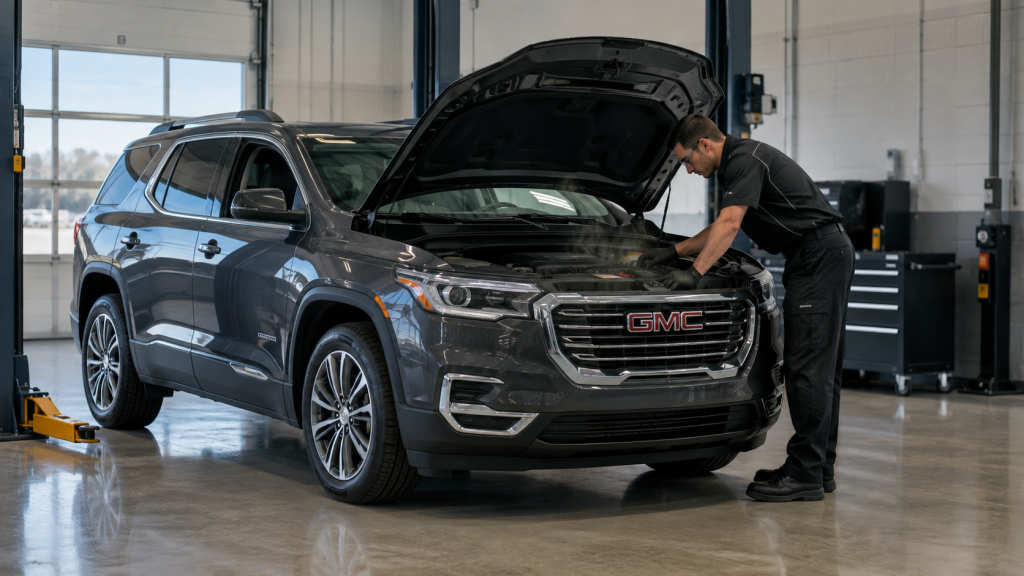
An oil change is one of the most crucial maintenance services your GMC needs. At your GMC dealer, the certified technicians offer expert oil replacement services, including a complimentary multi-point vehicle inspection to keep your truck or SUV reliable and fuel-efficient and extend the life of your engine.

Expert Oil Change Services at Your GMC Dealer

Our GMC Service Department

When it comes to your GMC, you want the best, top-quality services from the professionals at an authorized GMC dealer who know your truck or SUV inside and out. That’s why it’s crucial to count on our team of GMC-trained and certified technicians for an oil replacement at least twice a year or when you get the “Change Engine Oil Soon” message from your GMC’s Oil Life Monitoring System.

When our technicians perform an oil change, they use only GM-approved synthetic oil and conduct a thorough, complimentary multi-point vehicle inspection to ensure it’s operating at peak performance. With our expert oil replacement services, you can rest assured that your vehicle will receive the top-quality maintenance and care it deserves.

Synthetic Oil Replacements

Using the right oil for your engine is paramount to ensure maximum protection. Your vehicle’s oil lubricates the engine to minimize friction, heat, and wear, ensuring the components operate smoothly. However, the oil can get contaminated and deteriorate with usage and time, leading to insufficient lubrication, increased friction, and high fuel consumption. Synthetic oil is widely regarded as the superior choice.

It has a more uniform molecular structure, which doesn’t break down as quickly, offering increased engine lubrication, reducing friction, and preventing wear. Synthetic oil has a longer life than conventional oil and can withstand the high temperatures generated in your vehicle’s engine. Due to its excellent high-temperature protection, your vehicle may not require an oil change as often, extending the intervals between oil replacements.

Oil Filter Replacements

Changing your vehicle’s oil filter at the intervals recommended by GM or when you receive an alert from the Oil Life Monitoring System is vital to prevent engine damage and maintain proper engine performance. As part of our synthetic oil replacement service, our technicians also replace your vehicle’s oil filter.

The oil filter removes harmful contaminants from the oil that can otherwise cause severe engine damage. Replacing the old filter with a new one will keep the oil clean longer and keep dirt and debris away from the engine.

Complimentary Multi-point Vehicle Inspection

When you schedule an oil change at our GMC dealer, our certified technicians also perform a comprehensive Multi-Point Vehicle Inspection. This inspection helps evaluate the overall condition of your vehicle’s critical systems and components, enabling our technicians to detect problems before they escalate, cause severe damage, and costly repairs. We offer the following inspection checks at no extra cost to you:

Remaining Oil Life Check

The oil in your vehicle is vital to keep the moving components well-lubricated and running smoothly. Our technicians will check the remaining oil life percentage if you drive a newer GMC model with an Oil Life Monitoring System. The check will ascertain whether your vehicle requires an oil replacement.

Fluid Level Check

The fluids in your vehicle lubricate and cool the different mechanical components. Our technicians will check all your vehicle’s fluids to ensure they are all at the recommended levels. They will also look at the color and consistency of the fluids to see if they need to be replaced.

Brake Inspection

When you apply the brakes, multiple components work in unison to slow down your vehicle. These include rotors, brake pads, brake lines, and the brake master cylinder, all of which must function correctly. To keep you safe behind the wheel, our technicians thoroughly inspect your vehicle’s brake system, checking the lines, hoses, and parking brake. They also measure the brake pads to determine their thickness and whether they need to be replaced.

Battery Inspection

The lifespan of car batteries is typically between three and five years. Therefore, it’s crucial to have your battery inspected and tested regularly, particularly if it’s over three years old. This will help prevent unexpected breakdowns and avoid you being stranded on the roadside.

Our technicians will visually inspect your battery cables and connections to ensure everything functions correctly. Additionally, they will perform a battery test to determine the voltage level of the battery.

Tire Inspection

Your vehicle’s tires are the only components that come into direct contact with the road, making them susceptible to significant wear and tear. Worn-out or damaged tires can have a detrimental effect on your vehicle’s steering and braking performance and can significantly increase the likelihood of a blowout. This, in turn, can lead to accidents, making it crucial to keep your tires in good condition.

During our GMC dealer oil replacement service, our technicians will thoroughly inspect your tires to ensure they are properly aligned and balanced and check each tire’s tread depth and wear pattern. They will also examine the sidewalls for cracks, cuts, and bubbles caused by debris on the road. Structural damage is a significant safety hazard, so catching potential issues early on is essential.

Critical Systems Inspection

During a multi-point vehicle inspection, all your vehicle’s vital systems and components will undergo a thorough examination. The technician will also check for leaks.

Wiper Blades and Glass Inspection

Your wiper blades must clear your windscreen effectively. The wipers shouldn’t leave streaks, make high-pitched sounds, or skip across the windshield. If the wiper frames or blades are worn or damaged, and the glass is chipped or cracked, it will hinder your visibility.

Our technicians will thoroughly examine your front and rear wiper blades to check that they work properly and inspect your window glass for damage to ensure you have the visibility you need in inclement weather conditions.

OnStar Subscription Assessment

Safety is of utmost importance on the road. OnStar is an incredibly advanced system that gives you peace of mind by offering reliable safety and security features. Our technicians will conduct an assessment to ensure that your OnStar system subscription is connected correctly.

Check your GMC owner’s manual for details on the recommended oil replacement intervals and the proper oil best suited for your specific model. Call Cutter GMC in Waipahu, HI, today to schedule an appointment, and our certified GMC technicians will perform an expert oil replacement and a multi-point vehicle inspection.
Recommended Posts

Car Battery Smells Like Rotten Eggs and What It Means

Car battery smells like rotten eggs can point to hydrogen sulfide gas escaping near the battery. That odor deserves prompt attention because a healthy battery should not release a strong sulfur smell. Hydrogen sulfide can appear when a lead acid battery overheats, leaks, or receives too much charging current. Therefore, the smell is a clue that the battery and charging circuit need inspection. You do not need to panic, but you should avoid ignoring the odor. Car Battery Smells Like Rotten Eggs Because Gas Is Escaping Why does a car battery smell like rotten eggs? Hydrogen sulfide is a sulfur bearing gas that can create this odor around a failing battery. A conventional 12 volt lead acid battery contains electrolyte and lead plates inside a sealed or vented case. Chemical reactions inside the battery store and release electrical energy. However, excessive heat or charging can disturb that process and increase gas production. Hydrogen sulfide carries a very distinct sulfur odor. Therefore, a rotten egg smell near the battery deserves attention even if the engine still starts. The battery may still provide power while internal damage develops. more Additionally, visible clues can support the diagnosis. Swelling, cracks, wet residue, heavy corrosion, or unusual heat deserve a closer look. A battery case that changes shape can indicate internal pressure or heat. GMC models rely on the 12 volt battery for starting and many electrical functions. Because of that role, battery trouble can also show up through slow cranking or unstable electrical operation. Still, the odor itself should lead to inspection before the problem grows. What Does Battery Acid Smell Like? Battery acid is sulfuric acid electrolyte, while hydrogen sulfide creates the familiar rotten egg odor. The two substances are related to battery chemistry, but they are not the same thing. Sulfuric acid sits inside many lead acid batteries as part of the electrolyte mixture. It is highly corrosive and can damage skin, eyes, clothing, and nearby materials. Therefore, visible leakage should never be handled casually. Hydrogen sulfide is a gas. It can escape when the battery overheats or suffers internal trouble. Because the gas carries the sulfur smell, people may mistake that odor for liquid battery acid. That distinction matters when you inspect the area. Wet residue near the case points toward possible electrolyte leakage. By contrast, odor without visible liquid can still point toward internal battery trouble. Additionally, corrosion around battery terminals does not automatically identify the exact fault. Corrosion can form through several chemical processes around the battery. Therefore, a technician should inspect the case, terminals, cables, and charging output together. If liquid is present, avoid touching it with bare skin. In addition, keep sparks, cigarettes, and open flames away from the battery area. A damaged battery deserves careful handling and proper service. How Overcharging Can Heat a Battery Can an alternator make the battery smell like sulfur? The alternator charges the battery while the engine runs, and excessive charging can overheat it. The charging circuit regulates how much electrical energy reaches the battery. When voltage rises too high, the battery can receive more charging current than it should. Consequently, internal temperature can rise and chemical reactions can accelerate. That extra heat can increase gas production inside a lead acid battery. Therefore, replacing only the battery may miss the source when the charging circuit has a fault. A technician may inspect several areas after a sulfur odor appears: Charging voltage can show whether the alternator and regulator are sending the battery an appropriate electrical level. Battery temperature and case shape can reveal heat or pressure that deserves closer inspection. Cable and terminal state can show whether poor electrical connections are adding resistance or creating charging problems. A weak alternator can create other electrical problems, but excessive charging raises a different concern. Therefore, the testing process should include battery health and charging output. For GMC owners, this matters because a fresh battery can suffer damage if an unresolved charging fault remains. A complete inspection protects the replacement from the same cause. When the Smell May Come From Somewhere Else Does every rotten egg smell come from the battery? Sulfur odors can also come from fuel or exhaust faults, so odor location provides useful diagnostic context. A catalytic converter processes exhaust gases before they leave the tailpipe. Fuel mixture problems or converter trouble can create a sulfur odor near the exhaust path. Therefore, the strongest smell location can guide the first inspection. If the odor is strongest under the hood near the battery, battery trouble moves higher on the list. If the smell follows the exhaust stream, the technician may inspect fuel and exhaust components first. Additional symptoms also matter. A battery problem may appear with swelling, corrosion, slow cranking, or electrical trouble. By contrast, an exhaust related issue may appear with poor engine operation, warning lights, or unusual exhaust odor. Still, smell alone cannot confirm the exact source. A technician can inspect both areas when the origin is unclear. Therefore, avoid replacing parts based only on odor. A GMC owner may notice the smell after parking, starting, or driving. The timing and location both provide useful clues. Sharing those details can make the inspection more focused. What Should You Do When a Battery Smells Like Sulfur? A sulfur odor near the battery calls for prompt inspection of the battery and charging circuit. The safest next step is to limit handling and have the source checked. Do not lean directly over a swollen, hot, cracked, or leaking battery. In addition, keep ignition sources away from the area. Hydrogen sulfide and other battery gases deserve caution. Before service, note what you observed: Odor location can show whether the smell is strongest near the battery or the exhaust. Visible swelling, wet residue, or corrosion can give the technician useful inspection clues. Starting trouble, warning lights, or recent charging problems can add context to the battery test. If the battery feels hot or looks damaged, avoid unnecessary driving. Therefore, professional inspection should happen before you rely on the vehicle for another trip. The technician can test battery state, charging voltage, cable connections, and visible battery damage. If the alternator is overcharging, that fault also needs correction before a replacement battery goes into service. Car battery smells like rotten eggs should never become a background odor you simply accept. The smell can point toward battery gas release or another sulfur source. With a careful inspection, you can identify the source and handle the repair with clear information.

How to Defog Windshield in Humidity: A Hawaii Guide

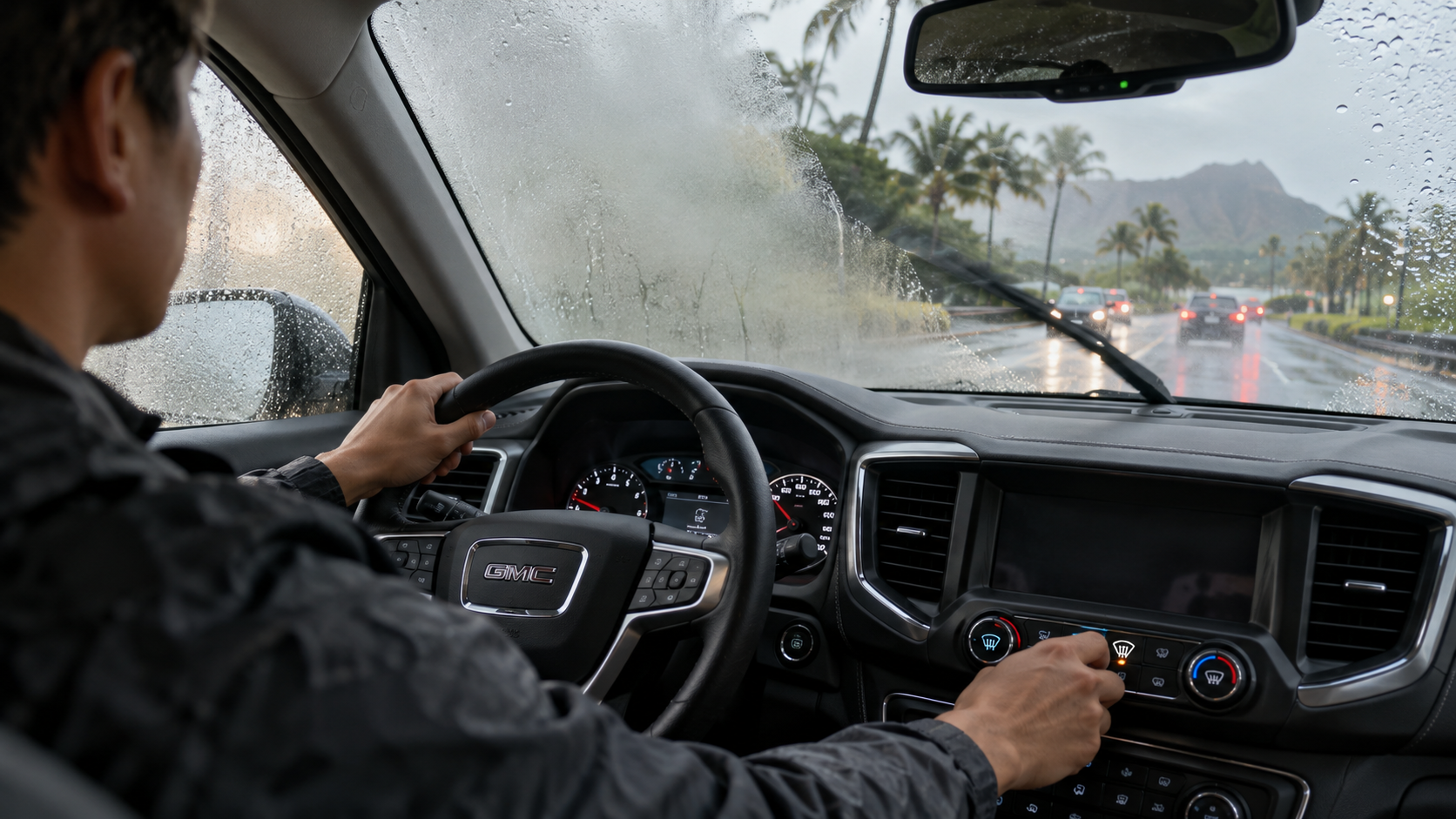
Learning how to defog windshield in humidity starts with finding which side of the glass holds the moisture. Hawaii rain can raise moisture levels within minutes. Cool cabin air can also chill the windshield during a warm drive. Therefore, the correct fix starts with a quick surface check. Once you find the wet side, each climate control has a clear job. The goal is simple. Remove moisture, warm the glass slightly, and restore a clear view. Why Windshields Fog in Hawaii Windshield fog is liquid water that forms when moist air touches glass below its dew point. Dew point is the temperature where air can no longer hold all its water vapor. Therefore, that vapor changes into tiny droplets on the glass. In addition, Hawaii creates several common triggers. Warm outdoor air carries plenty of moisture. Rain adds more water to clothing, shoes, floor mats, and umbrellas. In addition, passengers release moisture through breathing. Wet floor mats inside a GMC can raise cabin moisture quickly. more Beyond that, strong air conditioning adds another piece. As a result, cold cabin air lowers the windshield temperature. When warm outdoor air reaches the cooler glass, droplets may form on the outside. However, interior moisture may form when damp cabin air touches that same cool surface. Therefore, the fogged surface controls the next step. Interior fog needs drier cabin air and stronger airflow. Exterior fog needs wipers and a small glass temperature change. Therefore, pressing random buttons can waste time and leave the view cloudy. Is the Fog Inside or Outside the Windshield? Interior fog sits on the cabin side, while exterior fog sits beneath the wiper blades. Therefore, a fast check can identify the surface before you change any GMC climate settings. With that in mind, swipe one small area with a clean finger or microfiber cloth. A clear mark means the moisture sits inside. Next, run the wipers once. A clear path means the moisture sits outside. If both tests clear separate areas, moisture may exist on both surfaces. For this reason, inside fog commonly appears after passengers enter with wet clothes or damp shoes. Additionally, it may appear during rain with the windows closed. Because the cabin keeps collecting moisture, the glass can cloud again after an early clearing. By contrast, outside fog commonly appears after the cabin becomes much cooler than the outdoor air. The cold windshield then contacts warm, wet air. Consequently, water gathers on the outer surface. This pattern is common during humid mornings, showers, and coastal drives. Therefore, use the surface test before changing the temperature. That step prevents the wrong response. It also explains why wipers solve some fog, while vents solve other fog. How to Clear Interior Windshield Fog Defog mode sends dried air toward the windshield while fresh air intake removes trapped cabin moisture. Your GMC climate controls combine airflow direction, fan speed, temperature, and air conditioning for this task. With that in mind, start by selecting front defog or front defrost. Then raise the fan speed. Keep the air conditioner on, even during warm weather. The evaporator pulls water from the air before the blower sends it toward the glass. Additionally, turn recirculation off. Recirculation keeps cabin air moving through the same space. That air may contain moisture from breath, wet clothing, and damp carpeting. Fresh air intake replaces part of that wet air with outside air. Use these steps in order: Select front defog or front defrost, then direct the vents toward the windshield. Turn on the air conditioner, raise the fan, and choose a warm but comfortable temperature. Turn recirculation off, then keep fresh air moving until the glass remains clear. In addition, cracking a window may speed moisture removal during heavy rain. However, keep the opening small so rain does not enter. Once the windshield clears, lower the fan gradually. Still, keep some airflow aimed toward the glass until the cabin dries. Furthermore, warm air can support evaporation from the inner surface. Yet extreme heat is not required in Hawaii. A moderate setting can dry the glass while keeping the cabin comfortable. How to Clear Exterior Fog During Humid Weather Cold cabin air can chill GMC windshield glass until humid outside air leaves water on its outer surface. Therefore, the wipers should provide the first clue and the first response. Therefore, run the wipers to remove the droplets. Then raise the cabin temperature slightly. You can also reduce the air conditioning level for a few minutes. These changes warm the windshield enough to slow new condensation. Still, keep airflow moving across the glass. However, do not aim very cold air at one spot for a long period. That can keep the outer surface below the dew point. Instead, choose a moderate temperature and steady fan speed. Rain may create both exterior water and interior moisture. Therefore, drivers may need the wipers and front defog at the same time. The wipers clear the outside. At the same time, treated air clears the inside and dries the cabin. Exterior fog may return during shaded drives or sudden showers. For this reason, watch the glass after the first wipe. A small temperature change can stop the fog cycle before visibility drops again. How to Keep Windshield Fog From Returning Recurring fog means the cabin still holds moisture or the glass remains below the surrounding air’s dew point. The next step is finding where that moisture stays between drives. With that in mind, remove wet umbrellas, towels, and floor mats when possible. Dry soaked carpet before the next trip. In addition, clean the inside glass with a residue-free automotive glass cleaner. Film from cleaners, smoke, skin oils, or interior products gives droplets more places to collect. Additionally, check airflow from your GMC dashboard vents. Weak airflow may point to a loaded cabin air filter or a blocked vent path. Furthermore, a musty smell can signal stored moisture near the carpet or ventilation housing. Beyond that, look for water near door seals, windshield edges, and the front footwells. Also inspect the cargo area after heavy rain. A leak can keep the cabin damp long after the weather clears. However, an oily film with a sweet smell needs prompt inspection. That pattern may point to coolant vapor near the heater core. Likewise, repeated fog with soaked carpet may point to a drain or seal concern. Therefore, clear glass depends on dry air, steady airflow, and the correct surface diagnosis. Therefore, begin with the finger test and wiper test. Then use front defog, air conditioning, fresh air, and moderate warmth for interior moisture. For exterior moisture, use the wipers and warm the glass slightly. These steps fit Hawaii’s rain, coastal moisture, and warm air without adding unnecessary cabin heat.

Why Vehicles in Hawaii Experience Wear Differently Than on the Mainland

Driving in Hawaii creates a very different ownership experience than driving in most mainland states. Many drivers focus on mileage when evaluating long term vehicle condition, but climate, air quality, humidity, road environments, and driving patterns can all affect how a vehicle ages over time. In Hawaii, those environmental factors may accelerate certain types of wear that mainland drivers may not experience as quickly or as consistently. For GMC drivers, understanding how Hawaii’s environment affects vehicle systems can help support better maintenance decisions, improve long term reliability, and reduce unexpected repairs. Conditions such as coastal salt exposure, high humidity, intense UV exposure, short trip driving, and steep elevation changes all influence how different vehicle components behave over time. How Hawaii’s Humidity Can Affect Vehicle Components One of the biggest differences between Hawaii and many mainland regions is constant humidity exposure. High humidity levels can affect both exterior and internal vehicle systems, especially when moisture remains trapped over long periods. Many shoppers researching “how humidity affects cars” are trying to understand why certain problems appear earlier in tropical climates. Humidity itself does not automatically damage a vehicle, but prolonged moisture exposure can contribute to corrosion, oxidation, and premature deterioration in certain materials. In GMC models like the GMC Sierra 1500 or GMC Yukon, moisture exposure may affect: Brake components Battery terminals Electrical connectors Undercarriage hardware Weather seals Interior materials Humidity can also create challenges for cabin air quality systems. Moisture buildup inside HVAC systems may contribute to musty odors if cabin air filters and evaporator systems are not serviced regularly. Drivers living near the coast may notice these effects more quickly because humidity combines with airborne salt particles. That combination often creates a harsher environment for exposed metal surfaces. This is why regular washing, underbody cleaning, and routine inspections can matter more in Hawaii than they might in drier mainland climates. Why Salt Air Exposure Matters Even When You Do Not Drive on the Beach A common misconception is that salt related wear only affects vehicles driven directly on sand or near ocean water. In reality, coastal air can carry microscopic salt particles inland, especially in areas with strong ocean winds. Many mainland drivers associate corrosion primarily with winter road salt, but Hawaii drivers may experience year round salt exposure instead of seasonal exposure. For GMC trucks and SUVs, salt air exposure may gradually affect: Suspension components Exhaust systems Brake lines Frame coatings Fasteners and brackets Wheel finishes The GMC Canyon and GMC HUMMER EV, for example, both use advanced engineering and protective materials, but no vehicle is completely immune to environmental exposure over time. Salt accumulation that remains untreated may increase the likelihood of corrosion development underneath the vehicle. This is one reason many Hawaii drivers search for phrases like “car maintenance Hawaii” or “vehicle wear and tear factors.” They are trying to understand why preventive maintenance may become more important in island climates. Regular undercarriage rinses can help remove accumulated salt residue before it remains trapped against metal surfaces for extended periods. Short Trip Driving Can Create Different Maintenance Needs Another factor that affects vehicle wear in Hawaii is driving behavior itself. Many mainland drivers regularly commute long highway distances, but Hawaii driving patterns often involve shorter trips with more stop and go traffic. Short trip driving can affect how certain systems operate because the vehicle may not remain at full operating temperature long enough during each drive cycle. In GMC models equipped with turbocharged engines, advanced fuel systems, or emissions technology, repeated short distance driving may contribute to: Faster oil contamination Increased battery strain Carbon buildup over time Reduced fuel efficiency consistency Higher brake wear in traffic heavy areas Drivers researching “car wear in hot climate” are often surprised to learn that heat alone is not always the primary issue. Driving patterns combined with climate conditions typically create the larger long term effect. For example, a GMC Acadia frequently driven in stop and go traffic with short trips may experience different maintenance intervals compared to the same vehicle driven primarily on mainland highways. This does not mean Hawaii driving is inherently harmful. It simply means vehicle systems may experience different operating conditions that can influence maintenance timing and component longevity. Sun Exposure and Heat Can Affect More Than Paint Hawaii’s strong sunlight and UV exposure can affect both exterior and interior vehicle materials over time. Many drivers immediately think about paint fading, but UV exposure may also influence rubber, plastic, leather, and electronic surfaces. Vehicles parked outdoors regularly may experience faster wear involving: Dashboard materials Exterior trim Tire sidewalls Window seals Wiper blades Paint clear coat durability For GMC vehicles with large infotainment displays and advanced interior technology, reducing prolonged interior heat exposure may also help preserve cabin materials over time. Many drivers evaluating “vehicle wear and tear factors” are really trying to understand how environmental conditions change ownership expectations. Hawaii’s climate does not automatically shorten vehicle life, but it can increase the importance of consistent maintenance and protective care. Simple habits may help reduce long term exposure effects: Parking in covered areas when possible Applying paint protection products Using windshield sunshades Cleaning salt and moisture buildup regularly Inspecting rubber seals and trim periodically Elevation Changes and Terrain Can Influence Wear Patterns Not all Hawaii driving conditions are tropical cruising or coastal roads. Many areas involve steep elevation changes, winding roads, and mountainous terrain that place additional demands on braking systems, cooling systems, and driveline components. For GMC trucks like the GMC Sierra HD or GMC Canyon AT4, terrain capability is part of the vehicle’s design purpose. Still, elevation changes and heavier braking loads can increase wear rates differently than flat mainland driving environments. Drivers in areas with frequent elevation changes may notice increased wear involving: Brake pads and rotors Transmission heat management Tire wear patterns Suspension components This is especially relevant for drivers who regularly tow boats, trailers, or recreational equipment in Hawaii’s warmer climate conditions. Many competing articles discussing Hawaii vehicle maintenance remain surface level and focus only on rust or heat. What often gets overlooked is how environmental conditions, terrain, humidity, and driving behavior all work together to influence vehicle longevity. Understanding those combined factors helps drivers make more informed ownership decisions instead of reacting only after problems appear. Owning a vehicle in Hawaii simply involves a different environmental relationship than mainland ownership. Climate, coastal exposure, humidity, UV intensity, and driving patterns all shape how vehicles age over time. For GMC drivers, recognizing those differences can support smarter maintenance habits, better long term reliability expectations, and more informed service planning based on real world island driving conditions.