



Key Takeaways:
•Antifreeze is a chemical additive that stops radiator fluids from freezing.
•Glycol antifreeze is the most common coolant additive in the market.
•Dilution of antifreeze by climate-specific ratios creates car coolant.
•A coolant absorbs heat from the engine & dissipates it to the environment.
• Absence of coolant results in engine overheating & damage.
• The liquids are toxic and should not be handled or blended by amateurs.
Engine coolants are fluids that facilitate the dissipation of extreme heat generated within the engine block. It seems like quite a mouthful, but you must have come across terms like motor oil, radiator fluids & glycol antifreeze. While we’re not discussing all the car cooling fluids, we will focus on coolant & antifreeze and what makes them tick.
Gone are the days when the local mechanics & family elders used to pour tap or mineral water into the radiator reservoir because, as it turns out, these liquids are corrosive. They eat through the radiator lines, damage the engine gaskets, and let the fluid seep into the engine chamber. That’s why we now have special fluids to keep the car engine cool when running.
What Is an Antifreeze Coolant?
You can call it glycol antifreeze or an ethylene glycol coolant for all we care since the fluids are the same for most folks, and that notion is not wrong. But if you want to delve into the details, then one fluid is the subset of the other.
Antifreeze is a specialized mix of chemicals that arrest metal corrosion, reduce fluid friction, enhance heat absorbing & dissipating properties, and reduce viscosity when diluted into a car coolant. Another effective property is the reduction of freezing points & an increase in boiling points. That allows the radiator fluids to function across a range of harsh climates without the engine overheating, the coolant freezing, or turning to steam.
It is prepared with ethylene or propylene glycol base, and other chemicals are added to produce concentrated blends. You would have to have sufficient training & understanding of coolant ratios to dilute antifreeze for a Buick/GMC.
These blends can come in concentrates or prediluted coolants. They are designed for various climates, mileages, engine types & powertrains, but they all regulate optimal operating engine temperatures. And that is their primary purpose.
How Do These Radiator Fluids Work?
Regardless of whether it is a propylene or ethylene glycol coolant, the radiator fluid’s main job is to act as an engine coolant. The liquid is stored in the radiator reservoir, and from there, it is pumped through the engine block via several cross-sectional channels.
There, the coolant absorbs the heat generated by the internal combustion and gets pumped back to the radiator fins & fan to cool off. The cycle repeats for the duration of the engine’s operation.
Different Types of Antifreeze Blends
As of now, there exist three categories of glycol antifreeze.
- Inorganic Acid Tech
- Organic Acid Tech
- Hybrid Acid Tech
And, no, these are not corrosive acids. They are designed to resist corroding the interior of a car’s cooling system.
Compositions
· Inorganic Acid (IAT)
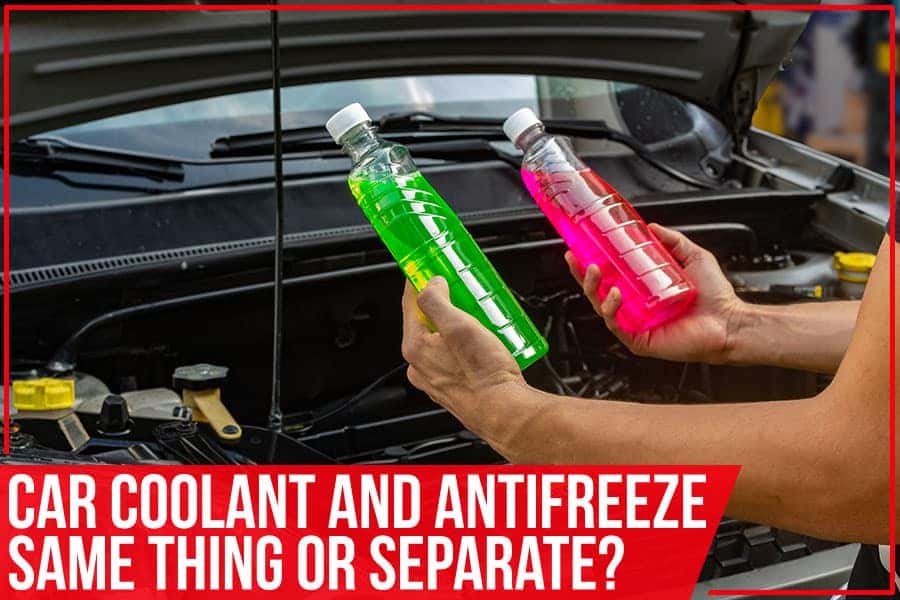
It is a blend of silicates & phosphates to protect internal metal surfaces that come in contact with aqueous coolant. They are effective for older cars with metal-based radiator systems. They also last up to 30,000 miles before needing a radiator flush. It is known for its bright green color.
· Organic Acid Tech (OAT)
This blend of glycol antifreeze does not have silicates or phosphates. And it is best used in cooling systems with aluminum or nylon components as it offers protection for these materials. So, the metal protection factor does not count. Plus, these coolants can last up to 150,000 miles. It comes in either orange or green hues.
· Hybrid Organic Acid Tech (HOAT)
It is an antifreeze blend that combines both positive of IAT & OAT to give a car coolant that offers metal surface protection & with a life of 150,000 miles. The fluid is usually yellow or orange.
Precautions
All antifreeze & coolant fluids vary in degrees of toxicity. These fluids must be handled carefully, and skin contact should be washed off immediately. If you are flushing coolant at home, dispose of it properly so it does not contaminate the environment.
Lastly, please do not attempt to mix up dilution ratios of coolant unless you are trained for it.
What Happens Due to Insufficient Coolant?
Internal combustion engines can reach temperatures up to 2800 – 4500 degrees Fahrenheit. And a coolant helps keep that number at a steady 265-475 degrees at the SURFACE of the engine block.
With insufficient glycol antifreeze or car coolant, the engine overheats. The battery & compressor begin to buckle under the strain. Plastic & rubber belts & hoses follow. Aluminum components begin to loosen & melt at around 1225 degrees. The radiator fluids boil & leak as superheated gas. Then the car shuts down.
Radiator Fluids Maintenance Is Critical
Car coolants can get dirty over time, so it’s essential to keep track of the type of coolant & service interval. Just as insufficient coolant levels can damage a car’s engine, contaminated fluids can also damage the engine internally.
The first signs of damage are usually felt in the radiator’s performance, and you can tally the signs here!
Contaminated coolant will have a dull color, bits of rust, and chunks of gunk so try not to let negligence go too far. This is also called coolant toxicity. The fluid becomes so filthy that it turns into acid and starts eating away at the components inside the radiator lines & the car’s cooling system. The water pump is the most critical piece of equipment that suffers the most damage from the dirty coolant.
Do You Need Radiator Service In Waipahu, HI?
Cutter Buick GMC, serving Honolulu, HI, has a range of amazing Buick & GMC vehicles in store in the new & pre-owned category. You can even shop express with us!
We also service vehicles and offer OEM parts, accessories, and service specials.
We understand the need for an appropriate glycol antifreeze & car coolant to keep many car cooling issues at bay. So, please feel free to contact us if you feel your car is either faulting on the radiator or the engine is overheating too often.
Contact us for more details, and schedule a radiator service at the first opportunity!
Connect with us
